Showing posts with label Semester I: 1C Amphibious Structures. Show all posts

Tuesday, 15 September 2015

Equilibrium Platform

Amphibious Structure
"Equilibrium Platform"
_________________________________________


First Prototype

Developed from my first idea of prototype, the first intended is to experiment of contrasting weight of the 2 objects and the relationship when the structure is growing up between vertical and horizontal. By a heavy object act as an anchor while the light one floating according the tide. So by the nature of the structure that could be flexible, I found the similar idea on “scale instruments" based on what is the things to be weight and does it need to be counter weight in the same time.
So "the scale" is the instrument that chosen to be analyze.  These instruments I categorized into 2 main different of an equal arm beam balances and unequal arm beam balances. From this drawing portray the different approach by each types totally have a distinguish on how to calibrate, the capacity of the instrument and how accurate it can be, which i think this research could help to develop the idea further.

Final amphibious structure I've include the research in to my design by have another approach while my first prototype does transform the space according to the tide ,but the final one is also rely on another counterweight which create more strength on the floating platform (the red one) by using the same idea of the scale to make this counterweight (yellow piece in the center) create a different isolated space on another surround 4 platforms. And all of these surfaces have beam as the connecting arms from one platform to another.


From my intention on this amphibious structure, the space could be more interested by transforming when the water change into a variety programs with the different levels platform in the same time.


Top view of the model


Sunday, 13 September 2015

Re-terrain Surface Unit

From the previous research prototype model, multiple rings surrounded the square platform was used to recreate the new terrain surface enclosing the area. However, due to the large contact ground on the individual ring, there is the limitation when it comes to resting in the unstable and uneven ground. Therefore, the structure is divided into units connected into one structure.


The hexagonal unit is tethered together loosely by using the vertical rails which makes the whole system intact. Each unit acts as an individual buoy possessing different buoyancy making it float with a different draft. This system will eventually be able to recreate the terrain. It could perform the mirror of the ground as it shows above, or it could even perform other countless variation of a terrain. It could also be attached into the larger land depending on the number of unit connected. This system will be able to sit on the uneven terrain, wrapping the ground creating the habitation surface.

As the water level is rising, the system will gradually float up creating the new program of the space. What is used to be the high ground will now become a void allowing water to flood in the middle to create the enclosed water surface surrounded by the multiple units. When the water level reaches the maximum, the invert terrain will be created. With some weight added to each unit, each one will have the different variation of draft producing the contour. The system is anchored to the ground preventing it from drifting. Some of the unit is, however, can be fixed to the ground acting as an anchor itself


Manipulable Platform

The First Prototype
This is the first idea model that shows how the platform can be manipulated through the change of the water level. The platform was divided into five section, three of them are made out of foam and the rest are made of acrylic. So when the water comes, floating part supposed to be moving up according to the water pressure and when the water height reaches 3.5 metres (in the real scale) they will be touching to each others. 

The movement of each section still be congested because of the thoughtless joints. There are still be some gaps that are provided for the structure to move up and down as I intended them to be. And the supposed-to-touched surfaces are now one of the problem that make the structure moves obstructively.

The Final Model

This structure has been developed from the first prototype by using the analysis of the various wave converter joints that I have done from the last phase as a guideline to improve performance of its structure.
Compared with the last prototype, this performing model has the better joints which allow its structure to smoothly move up and down with lesser congestion, This final shape allows its structure to be as a continuous surface during laying on the ground and the water height becomes 3.5 metres.  The rotated joint are provided the ball bearings to reduce the fiction in their movement.


This photo shows the joints for the supposed-to-touch surface. Because the thickness of all platform were now shaped concavely and convexly to allow the joint to be rotated when the water comes. And when it reached up the maximum height, the concave shape are supposed to touch to each other so that they need the joint to avoid all the sharp edges to touch to each other. This joint will be out and back to their sockets automatically.

Saturday, 12 September 2015

Shallow/Bifurcating Structure

From the analysis of mangrove tree develop to an amphibious structure. The structure is based on the concept of branching out continuously in order to strengthen and expand the foundation while keeping the foundation very shallow. The hollow structure act as a shelter to protect the interior which will be used as habitation.


Thursday, 10 September 2015

Amphibious Structure


Amphibious Habitat: Tensions, Movements, and Enclosures

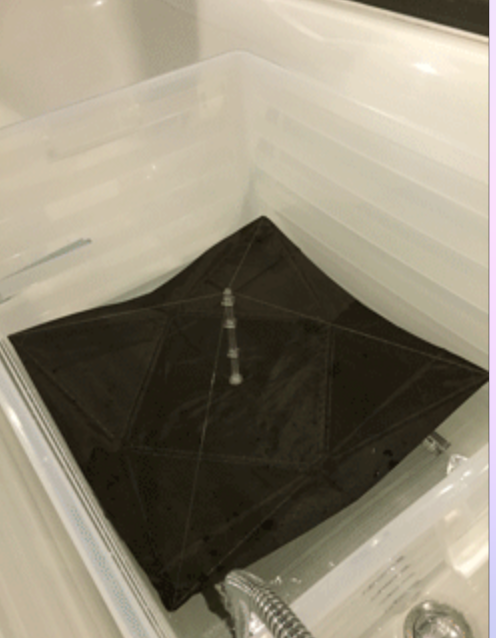
For this final part of this phase, I aim to use the concept of using string tension to create movements in the habitat space.

The whole space is covered with a big sheet of fabric, where the four angles will collapse slowly as the water rises. The four strings that are attached to the peak points of the four sides are gathered into the center, and is anchored in to the ground. As the center piece of the habitat floats when the water comes, it forces the strings to drag the four surrounding grounds upward, which in the end creates an enclosed space.